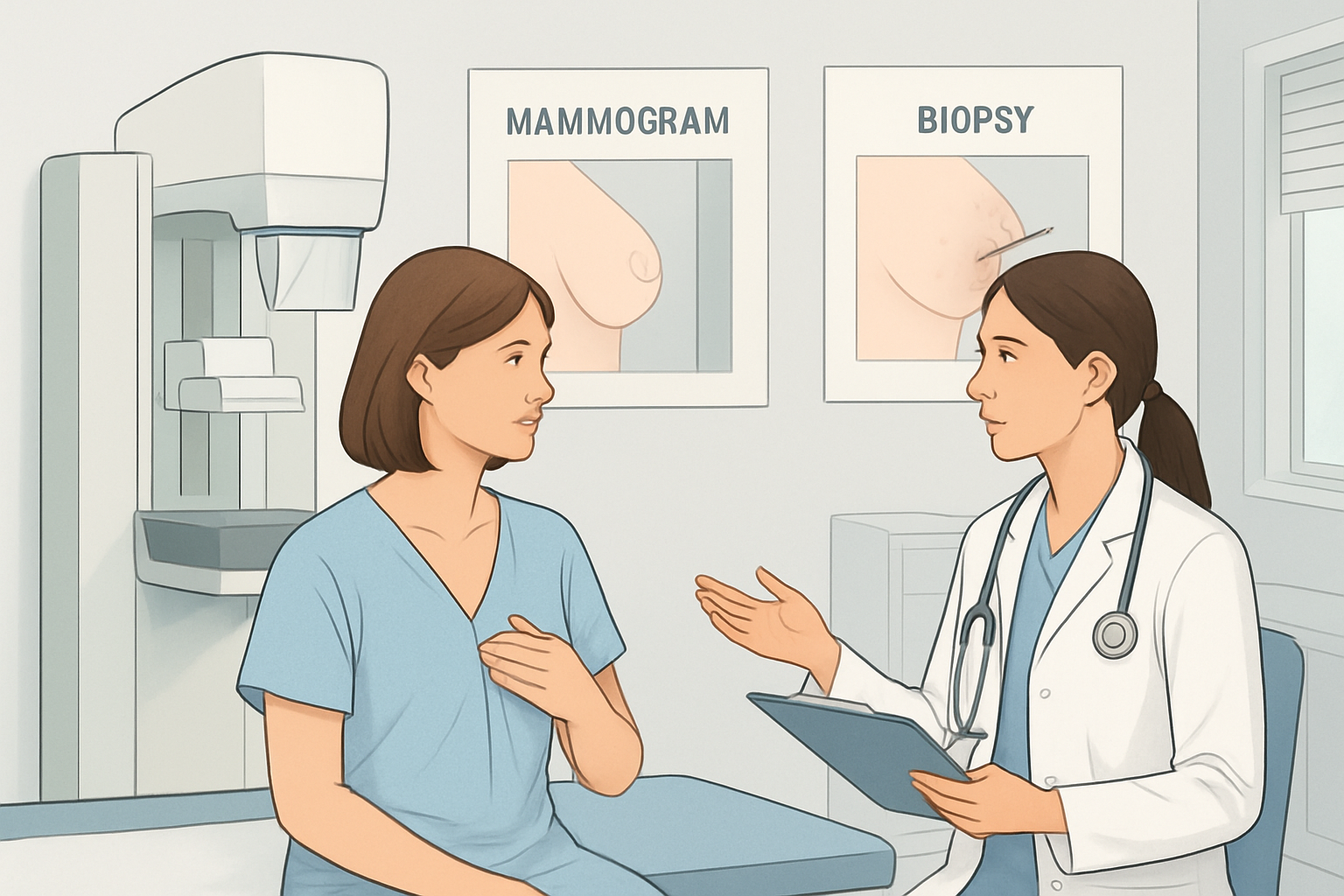
Receiving a breast cancer diagnosis can be overwhelming. You might encounter unfamiliar words, complex test results, and new decisions to make. This guide is designed to help patients and their loved ones understand the main concepts behind a breast cancer diagnosis—from the first signs to the key tests doctors use to determine the best approach. By learning these basics, you can feel more prepared and informed as you make choices about your care.
Key Takeaway
A breast cancer diagnosis is based on a series of important tests and findings, including the type, stage, and characteristics of the cancer. Knowing and understanding these details can help you and your loved ones make empowered decisions about treatment and next steps.
How Breast Cancer Is Diagnosed
Most people discover breast cancer after noticing a lump or change in the breast, though many cases are found through routine screening such as a mammogram or ultrasound. It is important to remember that not all breast lumps are cancerous, but further investigation is almost always recommended to make sure.
- Physical Exam: Your doctor will start with a careful examination of your breasts, underarms, and surrounding areas for lumps or unusual changes.
- Imaging Tests: Mammograms are specialized breast X-rays, while ultrasound uses sound waves to create pictures. These are often the first steps in breast cancer diagnosis. Sometimes an MRI (magnetic resonance imaging) is recommended for more detailed views.
- Biopsy: If a suspicious area is found, a small sample of tissue is removed and examined under a microscope. This step confirms whether the cells are cancerous (malignant) or not.
Key Terms in Your Breast Cancer Diagnosis
After the biopsy, your medical report will include terms and findings that describe your specific cancer. Here’s what they mean:
- Type of Breast Cancer: Most breast cancers are called “carcinomas,” which start in the lining of ducts or lobules. The two most common types are ductal carcinoma (starting in the milk ducts) and lobular carcinoma (starting in the milk-producing glands).
- Invasive vs. Non-Invasive: Invasive (infiltrating) cancers have spread beyond their starting point into surrounding tissue. Non-invasive means the cancer is still contained (such as “ductal carcinoma in situ,” or DCIS).
- Grade: This describes how abnormal the cancer cells look under the microscope, and how quickly they are likely to grow. Grades range from 1 (slow-growing, less aggressive) to 3 (fast-growing, more aggressive).
- Hormone Receptor Status: Breast cancers may be tested for estrogen receptors (ER) and progesterone receptors (PR). If your cancer is “hormone receptor-positive,” it means the cancer cells may respond to medications that block these hormones.
- HER2 Status: Some breast cancers make extra HER2 protein. “HER2-positive” cancers may grow faster but often respond to targeted drugs.
- Triple-Negative: This means the cancer is negative for estrogen receptors, progesterone receptors, and HER2. Triple-negative breast cancer is treated differently and may require chemotherapy.
Understanding Breast Cancer Staging
Staging is a key step after a breast cancer diagnosis. It tells you how much cancer is in the body, where it is located, and if it has spread (metastasized).
- Stage 0: Non-invasive (cancer is confined to ducts or lobules).
- Stages I-II: Early-stage breast cancer (cancer is present in the breast with or without limited spread to nearby lymph nodes).
- Stage III: Locally advanced (cancer has spread to several nearby lymph nodes or tissues).
- Stage IV: Metastatic (cancer has spread to other organs such as bone, liver, or lungs).
Staging uses a system called TNM:
- T (Tumor): Size and extent of the main tumor.
- N (Nodes): Whether the cancer has spread to nearby lymph nodes.
- M (Metastasis): Whether cancer has spread to other parts of the body.
Major Diagnostic Tests and What They Mean
After the initial diagnosis, you may need additional tests to understand your cancer more precisely. Key tests include:
- Pathology Report: After your biopsy or surgery, a pathologist analyzes the tissue and provides a detailed report. This report is essential for planning treatment.
- Lymph Node Biopsy: Checking nearby lymph nodes (often in the armpit/axilla) helps determine if cancer has started to spread.
- Genomic Testing: Some women, especially with certain ages or family histories, may undergo gene tests to see if inherited factors (like BRCA1 or BRCA2 mutations) are present, which can guide future risk and treatment.
- Genomic Assays of the Tumor: Tests such as Oncotype DX, MammaPrint, or others may be used on the tumor to predict how likely the cancer is to return and whether chemotherapy would help.
- Imaging for Staging: Sometimes a CT scan, bone scan, or PET scan is done if there is risk the cancer has spread.
Other Common Questions and Areas of Confusion
- Is Breast Cancer One Disease? No. There are multiple types and subtypes, each with their own behavior and treatment approaches.
- Does Every Diagnosis Mean Advanced Disease? No. Many breast cancers are found early and respond well to treatment.
- Are All Breast Cancers Genetic? Only a minority of cases are due to inherited gene changes—most are not.
- Does “Positive” or “Negative” Mean Good or Bad? These terms usually refer to the presence of certain receptors—not whether your outlook is good or bad. Your team can help explain what these results mean in your case.
Connecting Diagnosis to Treatment
The purpose of this detailed diagnosis is to select the best treatment options for you. For example:
- Hormone receptor-positive cancers usually respond to medicines that block hormones (like tamoxifen or aromatase inhibitors).
- HER2-positive cancers are often treated with drugs that target HER2 (like trastuzumab).
- Triple-negative cancers are usually treated with chemotherapy, as they do not respond to targeted hormone or HER2 therapies.
Surgery, radiation, and other therapies may be combined based on the cancer’s features and its stage.
What Patients Should Know
A breast cancer diagnosis is not just a single test or label—it is a detailed process that helps map out the most effective treatment strategies. Your care team will use information from your biopsy, pathology report, stage, and receptor status to recommend next steps that fit your unique situation.
It’s normal to feel shocked, confused, or frightened when you first hear your diagnosis. Remember, you do not have to understand everything at once—your oncology and nursing team are there to answer your questions as many times as you need. Take notes, ask for explanations in plain language, and consider bringing a family member or friend to appointments.
If you ever want a second opinion, or if you feel uncomfortable or unclear about your care plan, it’s appropriate to seek advice from other experienced breast cancer teams.
Sources
American Cancer Society (Breast Cancer Diagnosis), National Cancer Institute (Breast Cancer), Breastcancer.org, Mayo Clinic (Breast Cancer Diagnosis), World Health Organization (Cancer Diagnosis and Treatment).
Leave a Reply