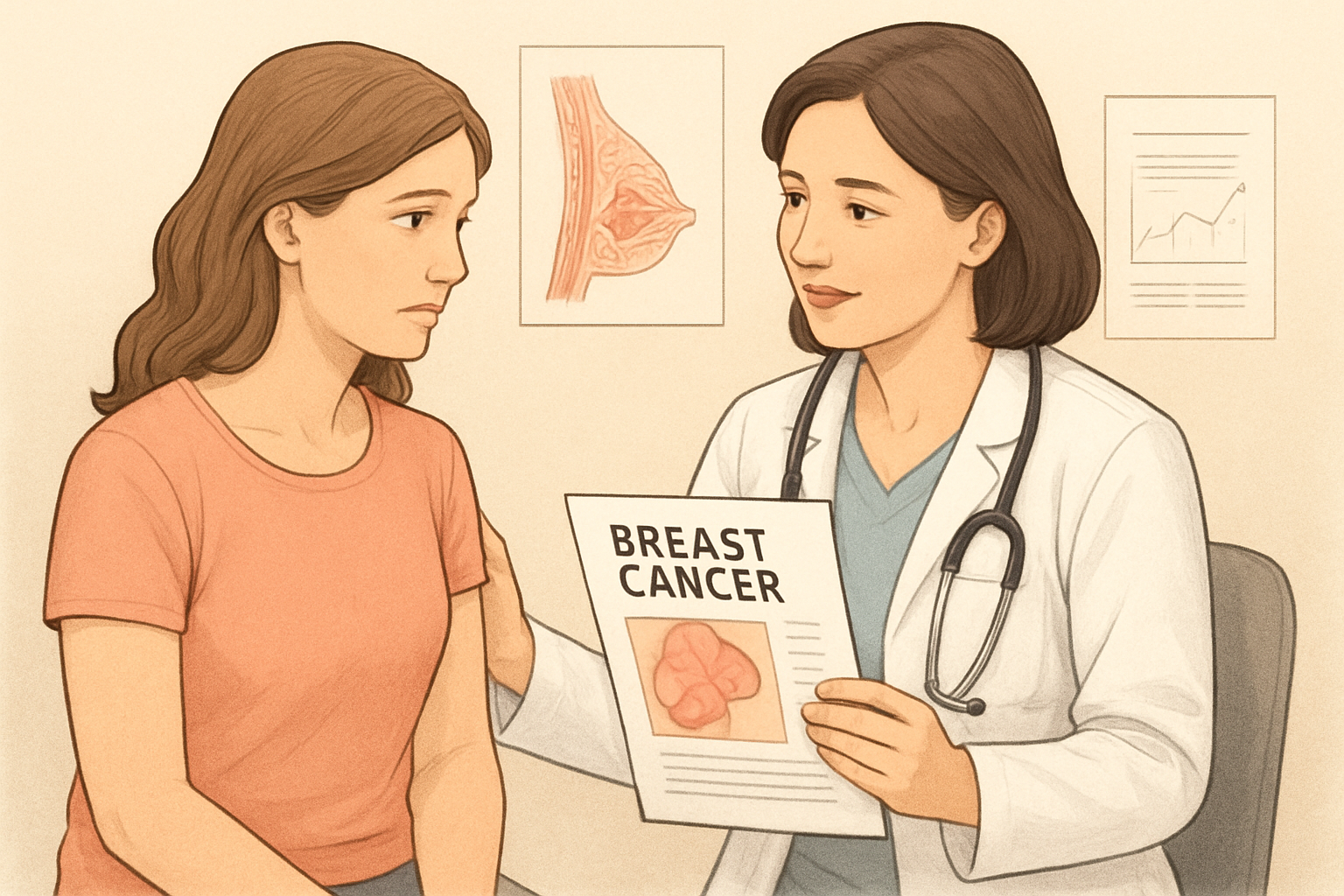
Receiving a diagnosis of breast cancer can be a life-changing moment. Whether you arrived at this point after a screening mammogram, the discovery of a lump, or another symptom, you are likely facing many questions. This guide aims to explain what a breast cancer diagnosis means, provide clarity on commonly used medical language, and outline what information matters most in the early stages of diagnosis. By understanding the basic facts and common steps, patients and families can feel more empowered as they start their journey.
Key Takeaway
The basics of a breast cancer diagnosis—what type of cancer you have, where it is, how far it has spread, and what its specific features are—set the stage for your treatment options. Learning this core information allows you to have informed discussions with your healthcare team.
What Is a Breast Cancer Diagnosis?
A diagnosis of breast cancer means that cancer cells have been found in the tissue of your breast. This is usually discovered through special imaging tests (like mammography, ultrasound, or MRI), followed by a biopsy, where a sample of tissue is examined under a microscope by a pathologist. The pathology report is a key document summarizing exactly what was found and helps guide further steps in treatment.
Breast cancer can take many forms. The most common types are:
- Ductal carcinoma in situ (DCIS): Cancer cells are found inside the breast ducts, but have not spread beyond them. Considered ‘non-invasive’ or ‘pre-cancerous,’ but still requires treatment.
- Invasive ductal carcinoma (IDC): Cancer began in the milk ducts and has spread into surrounding breast tissue. This is the most common type.
- Invasive lobular carcinoma (ILC): Cancer started in the milk-producing glands (lobules) and spread out from there.
Less common types include inflammatory breast cancer, triple-negative breast cancer, and rarer subtypes—your care team will explain the type you have, as it can influence your treatment choices.
Key Steps in Receiving a Diagnosis
Here’s what commonly happens when breast cancer is suspected:
- Screening or Noticing a Problem: An abnormality is found during routine screening (like a mammogram) or after noticing a breast lump, change in shape, skin dimpling, nipple changes, or other symptoms.
- Follow-up Imaging: Extra imaging—such as diagnostic mammograms, ultrasound, or MRI—helps clarify what is going on in the breast.
- Biopsy: A sample of breast tissue is removed using a needle or minor surgery, often with local numbing medication. This is the only way to know for sure if a suspicious area is cancer.
- Pathology Report: A pathologist examines the tissue and provides details on the type and characteristics of the cancer. This report is crucial.
- Staging Tests: If needed, other tests (such as blood tests, chest X-rays, bone scans, or CT scans) look for any evidence that the cancer has spread outside the breast and nearby lymph nodes.
Understanding Your Pathology Report
Your pathology report is a foundational document. It usually includes:
- Type of cancer: Describes where the cancer started (ductal, lobular, other types)
- Grade: A score (usually 1, 2, or 3) telling how much the cancer cells look like normal cells. Higher grade often means a more aggressive tumor, but not always.
- Hormone receptor status: Whether the cancer cells have hormone receptors (estrogen and progesterone). Positive results mean the cancer may respond to hormone-blocking treatments.
- HER2 status: Whether cancer cells make too much of the HER2 protein. If positive, special drugs targeting HER2 may be recommended.
- Margins: If surgery has already happened, the pathologist reports if the area around the tumor is free of cancer cells (“clear margins”) or if more surgery might be needed.
Copies of your pathology report are usually available through your doctor or hospital’s online records system. You can use it to track key information as you discuss options with your medical team.
What Is Breast Cancer Staging?
Staging describes how much cancer is in your body and where it is located. Stage is important because it helps guide treatment choices and gives a general sense of prognosis. Most breast cancers are staged using the “TNM” system:
- T (Tumor): How large is the main tumor in the breast?
- N (Nodes): Has the cancer spread to nearby lymph nodes?
- M (Metastasis): Has the cancer spread to distant parts of the body (bones, liver, lungs, etc.)?
Stages range from 0 (non-invasive or pre-cancer) to IV (cancer has spread to distant organs). Stage I and II generally indicate early breast cancer; stages III and IV indicate locally advanced or metastatic disease. Each stage is broken down even further depending on details and test results.
Genomic Tests and Biomarkers
Some breast cancers qualify for special tests (like Oncotype DX, MammaPrint, or others) that look at the activity of certain genes in the tumor. These tests may provide extra guidance on the likelihood of the cancer coming back and whether chemotherapy is recommended. Biomarker results such as hormone receptor status and HER2 also influence treatment plans. Not every patient needs these tests, so ask your doctor if these are relevant in your situation.
Common Questions and Confusion Points
- “Is my type of breast cancer common?” Around 70-80% of all breast cancers are invasive ductal carcinoma. Each patient’s diagnosis still has unique aspects that influence treatment.
- “What does triple negative mean?” This means the cancer is negative for estrogen receptor, progesterone receptor, and HER2. These types may behave differently and require different treatment approaches.
- “Does stage mean how aggressive my cancer is?” No, stage tells you how far cancer has spread; grade tells how aggressive the cells look. Both are important.
- “Can men get breast cancer?” Yes, though it is much less common than in women.
What Patients Should Know
Understanding your breast cancer diagnosis helps you take an active role in your care. Some practical steps and notes for patients and loved ones include:
- Ask for copies of your pathology and imaging reports and keep them in a safe place.
- Write down any questions you have before appointments.
- Bring a trusted person with you to visits for support and as a second set of ears.
- Remember: No two cases are exactly alike; online stories or statistics are averages, not predictions for individuals.
- Consider getting a second opinion if you feel uncertain or wish to confirm the diagnosis and treatment plan.
- Use credible sources for information. Be cautious of forums or social media; stick to nationally known cancer organizations or hospital resources.
- Do not hesitate to ask your care team to explain, repeat, or clarify any part of your diagnosis or follow-up plan. This is normal and expected.
Sources
American Cancer Society, National Cancer Institute, Breastcancer.org, Cancer Research UK, Mayo Clinic, and peer-reviewed journal articles on breast cancer diagnosis and pathology.
Leave a Reply