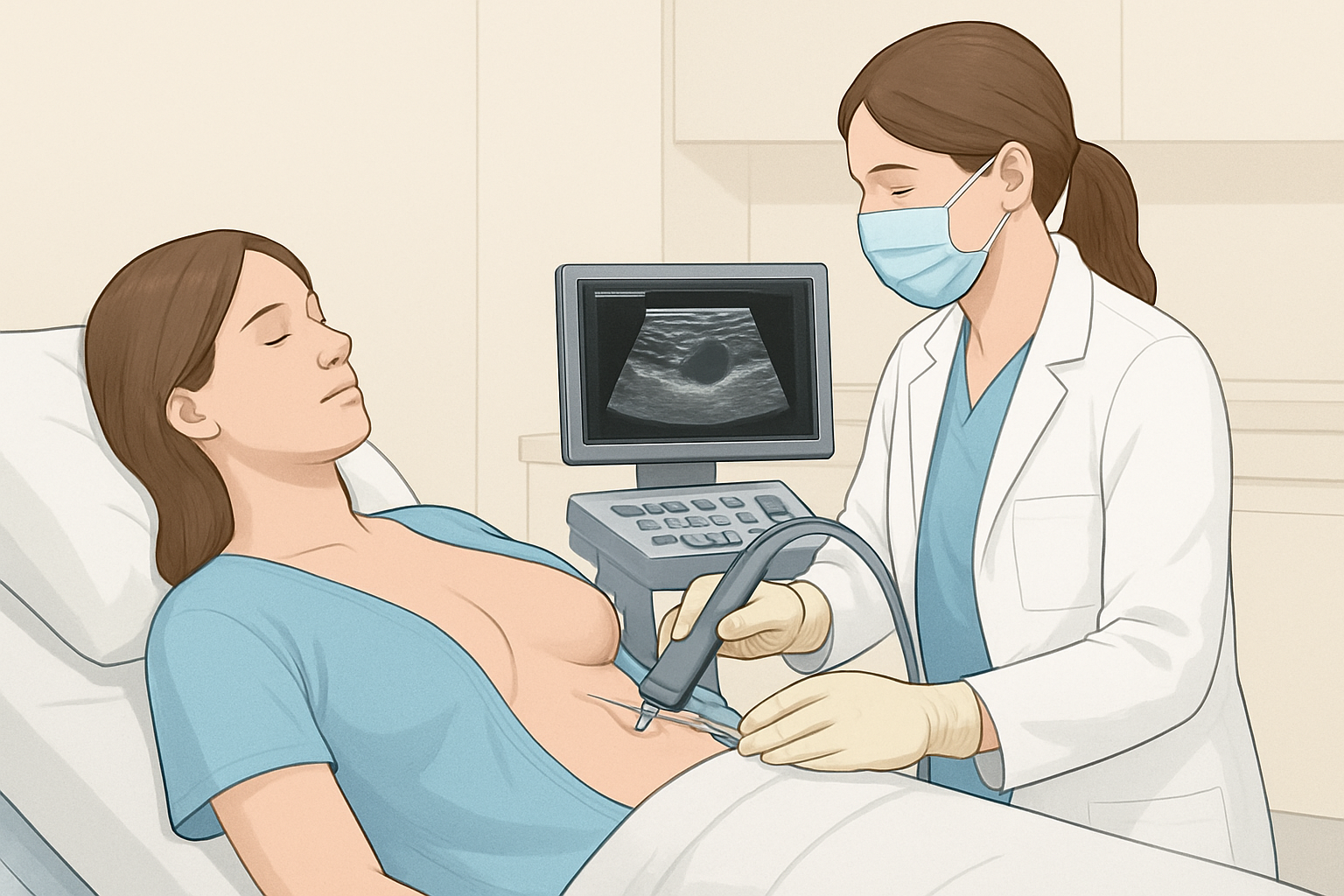
Being told you need a breast biopsy can be overwhelming. You may have questions about the procedure, why it’s needed, and what will happen next. A biopsy is one of the most important steps in the process of diagnosing breast cancer. It is a procedure that helps your healthcare team determine whether a lump or abnormal area seen on imaging is benign (non-cancerous) or malignant (cancerous). This article provides a step-by-step guide to what happens during a breast biopsy, aiming to help patients and families feel more prepared and informed throughout the process.
Key Takeaway
A breast biopsy is a standard procedure used to determine if a breast abnormality is cancerous. Knowing each step of the biopsy process can help patients feel more informed and in control.
Why Biopsies Are Needed in Breast Cancer Diagnostic Care
A breast biopsy is usually recommended after an abnormal area is found during a physical exam or on a screening test such as a mammogram, ultrasound, or MRI. Imaging tests are excellent at showing if something looks suspicious, but they cannot confirm cancer. Only by examining tissue or cells under a microscope can doctors make a clear diagnosis.
Without a biopsy, doctors cannot determine what type of tissue is present, whether it’s cancer, and what kind it might be. This information is crucial for making decisions about the next steps in care, whether that means monitoring, further testing, surgery, or other treatments.
Types of Breast Biopsies: What Are the Options?
There are several types of breast biopsies. The choice depends on the size, location, and characteristics of the abnormality, as well as personal medical factors. Your healthcare team will recommend the most appropriate type for your situation.
- Fine-Needle Aspiration (FNA): Uses a thin needle to withdraw a small sample of cells. Often done for cysts or lumps that are easy to feel.
Pros: Quick, minimally invasive.
Cons: May not provide enough information for certain diagnoses. - Core Needle Biopsy: Uses a larger needle to remove cylinders (cores) of tissue. Usually done with local anesthesia and sometimes guided by imaging.
Pros: Provides more tissue for analysis; less invasive than surgery.
Cons: Small risk of bleeding or infection, may occasionally need repeat sampling. - Stereotactic Needle Biopsy: Uses mammography or another imaging technique to precisely locate and sample suspicious areas that can’t be felt.
Pros: Useful for tiny calcifications or areas far from the skin.
Cons: Slightly longer; you may need to remain still in a fixed position. - Ultrasound-Guided Biopsy: Uses ultrasound imaging to guide the needle to the right spot.
Pros: Useful for certain types of lumps; often quick and comfortable.
Cons: Not suitable for abnormalities not visible on ultrasound. - Surgical (Open) Biopsy: Involves removal of part or all of the suspicious area through a minor surgical procedure.
Pros: Provides the largest tissue sample.
Cons: More invasive; typically reserved for situations where needle techniques are not possible or inconclusive.
Preparing for Your Breast Biopsy
Your medical team will provide you with specific instructions based on your health, medications, and the biopsy type. Here are common steps:
- Discuss medications: Ask if you should stop blood thinners, aspirin, or supplements that increase bleeding risk.
- Wear comfortable clothing: You may be asked to undress from the waist up, so a two-piece outfit is helpful.
- Arrange a ride: For some biopsy types, you may want someone to drive you home, mainly if mild sedation is planned.
- Mental preparation: It’s normal to feel nervous. Taking a friend or family member with you is often allowed and can help provide support.
Step-by-Step: What Happens During the Biopsy Procedure
- Check-In and Consent: On arrival, you’ll check in. You’ll be asked to sign consent forms once all your questions are answered.
- Positioning: You’ll be guided onto a table or chair. The staff helps position you so the area of concern is clearly visible and accessible.
- Cleaning and Anesthesia: The skin is cleaned with antiseptic. Local anesthesia is injected to numb the area; you may feel brief stinging or pressure.
- Imaging Guidance (if needed): For image-guided biopsies, expected in many cases, the radiologist or surgeon uses ultrasound, mammography, or MRI to target the area precisely.
- Tissue Sampling: The doctor inserts the needle and collects tissue or fluid. You may feel slight pressure but should not feel sharp pain. The number of samples taken depends on the abnormality’s size and type.
- Finishing Up and Aftercare: After the sample is taken, pressure is applied to minimize bleeding. A bandage or small dressing is placed. You can usually go home the same day. Most women can return to normal activities within a few hours to a day, though strenuous activity may need to be avoided briefly.
What Happens After the Biopsy?
After the biopsy, samples are sent to a pathology laboratory, where a pathologist examines the tissue under a microscope. Results are usually ready within several days, though the timeline can vary by location and laboratory load.
Pathology reports often include details such as:
- If the tissue is benign (not cancer) or malignant (cancer)
- The type and grade of cancer (if present)
- Sometimes results for hormone receptors (like estrogen or progesterone) or HER2 status, which help guide treatment decisions
Your doctor or a nurse will explain the results carefully and discuss possible next steps. This appointment is a good time to ask more questions, bring a support person, and talk openly about further testing or treatment if needed.
Emotions, Anxiety, and Coping With the Waiting Period
The time between having a biopsy and getting results is often stressful. Many people report anxiety and trouble sleeping. Here are tips that might help:
- Keep a list of questions for your care team
- Lean on supportive friends or family
- Practice self-care routines that help you relax (gentle exercise, journaling, deep breathing)
- Avoid searching for worst-case scenarios online; focus on information from trusted providers
Remember, most breast biopsies do not result in a cancer diagnosis. Yet, waiting can still feel challenging. If anxiety is overwhelming, reach out to your healthcare provider for professional support, or consider talking to a counselor who works with cancer patients.
Understanding Risks, Side Effects, and Safety Concerns
Breast biopsies are considered very safe. The risks are generally low and include:
- Bruising or soreness at the biopsy site (common, resolves within days)
- Small risk of bleeding, especially for patients on blood thinners
- Minor chance of infection – watch for redness, fever, or unusual swelling
- Very rarely, needle biopsies may not collect enough tissue, requiring a repeat procedure
Be sure to follow all aftercare instructions and alert your care team if you notice unexpected symptoms.
Questions to Ask Your Health Team About Biopsy
Being informed helps you take an active role in your care. Consider asking:
- What type of biopsy will I have, and why?
- How should I prepare for the procedure?
- What are the possible outcomes, and how will results be explained?
- How soon will I get my results?
- Will I need further tests, no matter the result?
- What side effects should I watch for after the biopsy?
What Patients Should Know
For many women, a biopsy is one of the first major procedures on the path to understanding a breast abnormality. It is normal to feel uncertain or anxious, but remember, the main purpose of this test is to clarify your diagnosis, so you and your care team can make informed choices together. Most biopsies are quick, cause minimal discomfort, and do not significantly disrupt daily life. Bringing a list of questions, a trusted support person, and focusing on the facts can make the process less intimidating. Reliable information, open communication with your doctors, and emotional support are all crucial as you move forward, whether the findings are benign or require further discussion.
Sources
American Cancer Society – Breast Biopsy Overview; Mayo Clinic – Breast Biopsy Procedures; National Cancer Institute – Types of Breast Biopsies; Cancer Research UK – Breast Biopsy Information.
Leave a Reply