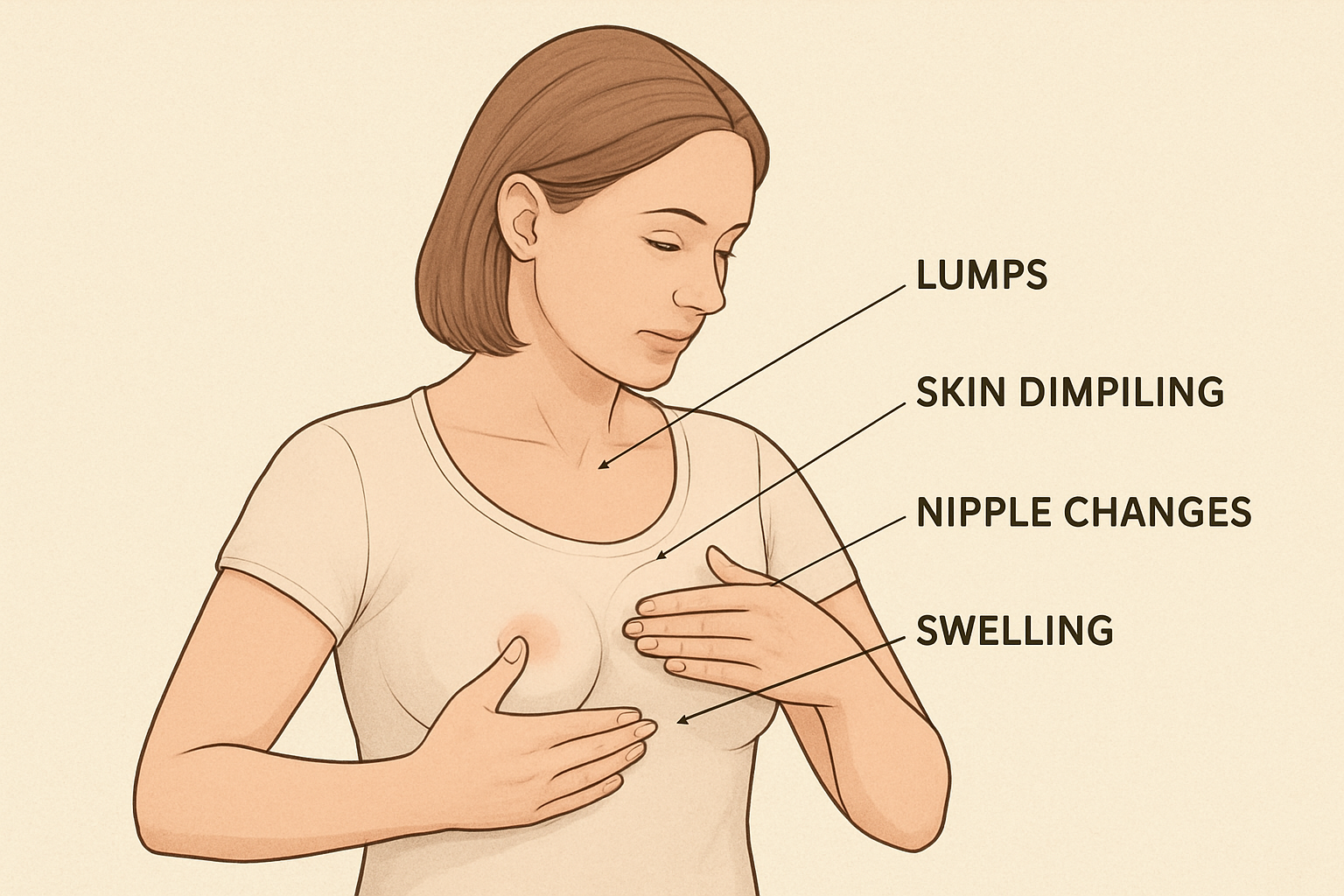
Spotting changes in your breasts can feel concerning, and it’s natural to have questions about what those changes might mean. For many women and men, awareness of early breast cancer symptoms and other breast conditions is a key part of self-care. Knowing the early warning signs, when to consult a doctor, and what to expect next can help you take charge of your health with confidence and calm.
Key Takeaway
If you notice a new lump, changes in breast shape or skin, nipple changes, or any persistent discomfort in your breasts, it is important to seek evaluation from a healthcare provider. Most changes are not cancer, but prompt attention allows your medical team to investigate quickly and provide reassurance or early diagnosis if needed.
Why Recognizing Breast Changes Matters
Breast cancer is the most common cancer among women worldwide, and early detection greatly increases the chances of successful treatment. While there are many non-cancerous breast conditions, the first warning signs of breast cancer are often subtle and easy to dismiss. Understanding and responding to these signs can help catch cancer earlier, when it is easier to treat and outcomes are better. This knowledge is also important for men, as breast cancer—while rare—can also occur in males.
Common Early Warning Signs of Breast Cancer
Not all symptoms mean cancer, but there are certain changes that warrant prompt medical attention:
- A new lump or mass in the breast or underarm: While most lumps are benign (non-cancerous), a new, painless, hard lump with irregular edges is more likely to be cancerous.
- Change in breast shape or size: Noticeable swelling, distortion, or asymmetry that appears suddenly and does not fade with your cycle is a reason to see a doctor.
- Skin changes: Dimpling (resembling orange peel), puckering, redness, scaling, or thickening of the breast skin can signal serious changes, including inflammatory breast cancer.
- Nipple changes: New inversion (turning inward), discharge (especially if bloody or clear), scaly rash, or persistent pain around the nipple should be evaluated.
- Pain: While breast pain is common and often not related to cancer, any new, persistent, or unexplained pain should be discussed with your provider—especially if it is in only one breast.
- Swollen lymph nodes: Noticeable swelling or a lump in your armpit or above the collarbone can be a sign of spread or other health conditions that need attention.
Which Breast Changes Are Usually Harmless?
Many breast symptoms are caused by non-cancerous conditions such as cysts, fibroadenomas, hormonal changes, or infections like mastitis. These can cause lumps, pain, or even skin redness. However, because breast cancer can mimic these symptoms, only a medical provider can confidently distinguish between benign and concerning signs. Don’t ignore changes because they seem harmless—let your provider decide.
How to Check Your Breasts: Guidance and Cautions
Breast self-awareness means being familiar with the usual look and feel of your breasts, rather than following a strict self-exam schedule. Experts like the American Cancer Society now recommend women be “breast aware”—looking for new changes, rather than stressing about monthly self-exams. Still, some people feel reassured by regular checks. If you notice something different—whether during a self-exam, dressing, showering, or just by chance—it’s worth noting the change and monitoring it for a few weeks. If it persists or grows, consult your doctor.
How to Record and Share Breast Changes with Your Doctor
- Note when the change first appeared and how long you have noticed it.
- Describe the location, size, and character (hard, soft, mobile, painful).
- Document any changes related to your menstrual cycle.
- If possible, take clear photos if there are visible skin or nipple changes.
- Write down any other symptoms, such as fever, weight loss, or changes elsewhere in the body.
Sharing these details during your medical visit can help your provider make an accurate assessment and may speed up the process of diagnosis.
When to See a Doctor: Specific Scenarios
- If you notice a new lump (especially if it feels different than surrounding tissue or is growing)
- If breast skin looks red, dimpled, or thickened
- If your nipple inverts suddenly, develops a rash, or leaks unexplained fluid (especially if bloody)
- If you see swelling in your armpit or above your collarbone
- If you experience persistent pain in one area of your breast or underarm
- If any symptom persists for more than one full menstrual cycle (or, for men or postmenopausal women, more than a few weeks)
It is always safer to err on the side of caution. No question or concern is too minor—your provider is there to help you stay well and informed.
What to Expect During a Doctor’s Evaluation
If you report a breast change to your doctor, they will usually:
- Take a thorough personal and family history
- Perform a physical breast and armpit exam
- Recommend imaging tests as appropriate (such as mammogram, breast ultrasound, or MRI)
- Possibly suggest a biopsy (sampling of tissue) if there are concerns on imaging studies
Most breast changes have benign causes, but imaging or biopsy is the only way to know for certain. Your doctor will explain the findings and next steps. If a diagnosis of cancer or a pre-cancerous condition is made, you will discuss treatment options and support resources. If benign, your provider can guide further monitoring or treatment for comfort and reassurance.
Reducing Anxiety When You Notice Changes
Many people feel anxious or even fearful when noticing something new or unusual in their breast. Remember that most breast changes are not cancer, and seeing a doctor gives you the best information, faster peace of mind, or the earliest possible diagnosis if needed. No matter the outcome, prompt attention is empowering and can provide clarity amid uncertainty.
What Patients Should Know
The sooner you report breast symptoms, the more options are available if follow-up care is needed. Early detection of breast cancer—before it causes severe symptoms—makes treatment more effective and less invasive. Do not wait for symptoms to worsen or “go away.” Breast cancer is often curable in its earliest stages, and even benign changes deserve professional evaluation. Stay calm, make a note of your symptoms, and reach out to your healthcare team. You do not need to face questions or concerns alone—support and information are always available with your provider, cancer support organizations, and, if needed, professional counseling.
Sources
American Cancer Society, Mayo Clinic, National Cancer Institute, Cancer Research UK, World Health Organization (WHO)
Leave a Reply