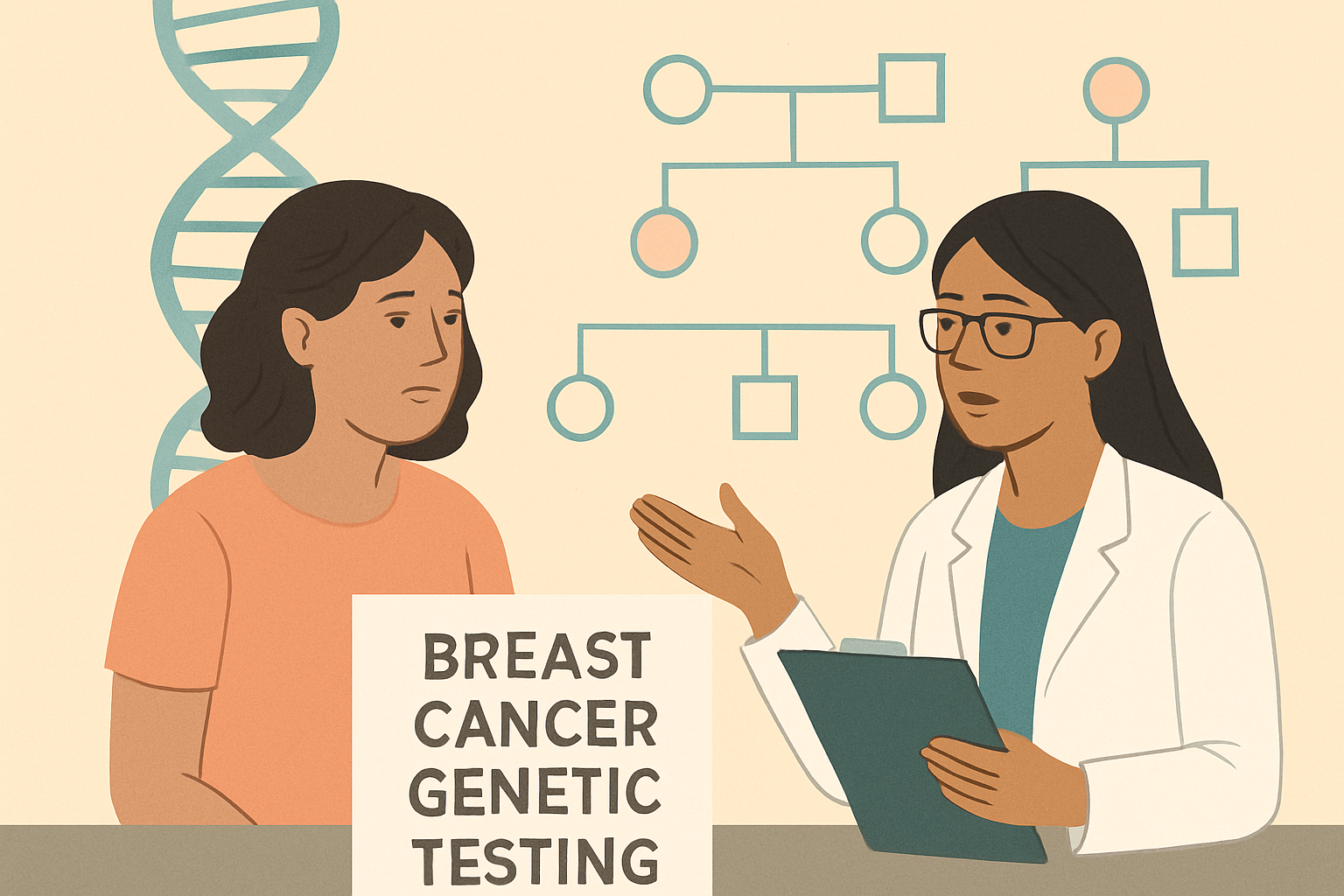
Breast cancer remains one of the most common cancers globally, affecting millions of women and some men each year. Advances in genetics have made it possible to better understand not just how breast cancer develops, but who may be at increased risk and why. For many patients and families, genetic testing for breast cancer offers powerful information that can shape personalized care, prevention strategies, and even affect the health of future generations.
This guide explains the basics of genetic testing for breast cancer, including why it matters, who may consider it, how it works, and the possible outcomes and next steps.
Key Takeaway
Genetic testing can identify inherited changes known as mutations that may increase an individual’s risk of breast cancer. This information can support more personalized decisions for treatment, prevention, and family planning, but it is important to receive appropriate counseling and support before and after testing.
What Is Genetic Testing for Breast Cancer?
Genetic testing for breast cancer refers to laboratory tests that look for specific inherited (hereditary) changes—mutations—in certain genes associated with a higher risk of developing breast cancer. The most well-known of these genes are BRCA1 and BRCA2, but there are others, such as PALB2, TP53, CHEK2, and more.
When someone inherits a mutation in these genes, their risk of developing breast cancer, and sometimes other cancers, is increased compared to the general population. Genetic testing is done on a blood or saliva sample, and results can provide vital information for both patients and their relatives.
What Are Genes and Mutations?
- Genes are segments of DNA that instruct our cells how to function. Some genes protect us from cancer by repairing damage and controlling cell growth.
- Mutations are permanent changes in the DNA. Some mutations have no effect, while others may cause genes to stop working properly, increasing cancer risk.
Why Is Genetic Testing Important?
- Identifies who may have inherited a higher lifetime risk of cancer
- Can guide treatment decisions (such as surgery or targeted therapy)
- Helps patients and families understand risks and consider prevention strategies
- Informs family members about their need for testing or increased surveillance
Who Should Consider Genetic Testing for Breast Cancer?
Genetic testing is not necessary for everyone diagnosed with breast cancer. It is usually recommended for:
- People diagnosed with breast cancer at a younger age (commonly under 45 years)
- Individuals with triple-negative breast cancer (especially under age 60)
- Those with a strong family history of breast, ovarian, prostate, pancreatic, or other related cancers
- People of certain ethnic backgrounds with higher mutation frequencies (e.g., Ashkenazi Jewish heritage)
- Relatives of someone known to carry a pathogenic breast cancer gene mutation
- Men diagnosed with breast cancer, as this is rare and may be associated with underlying genetic changes
- People with multiple separate cancers, or specific rare cancer types
The National Comprehensive Cancer Network (NCCN), American Society of Clinical Oncology (ASCO), and other cancer organizations offer detailed guidelines about who should consider testing. However, these criteria can evolve over time. Your healthcare provider or a genetic counselor can help assess your personal and family history to determine if testing is appropriate.
How Is Genetic Testing Performed?
The process of genetic testing is straightforward, but there are several important steps to consider:
- Pre-test counseling: Meeting with a genetic counselor or knowledgeable provider to discuss your family history, understand the pros and cons of testing, and what the results could mean for you and your family. This is a critical part of the process to make sure the decision is informed and supported.
- Sample collection: A blood sample or, in some cases, a saliva (spit) sample is taken and sent to a laboratory that specializes in genetic analysis.
- Laboratory analysis: The laboratory examines relevant genes for known mutations associated with increased cancer risk. Many tests now use panels that screen multiple genes at once.
- Receiving results: Results are typically available in a few weeks. A genetics professional will explain what the results mean in plain language, including any next steps.
- Post-test counseling: Follow-up with your healthcare provider or the genetic counselor is important. They can help you understand the findings, emotional impacts, and recommended actions.
Possible Results Explained
- Positive: A known harmful mutation has been found. This may increase your risk for breast cancer and possibly other cancers. Your medical team will discuss specific options and recommendations.
- Negative: No known harmful inherited mutation was found in the genes tested. This generally suggests risk is lower but does not guarantee cancer will not develop due to other genetic or non-genetic factors.
- Variant of Uncertain Significance (VUS): A gene change was found, but it is not currently known if it increases risk. These results are common with multi-gene panel testing and may be reclassified over time as research advances.
Benefits and Limitations of Genetic Testing
Genetic testing offers many benefits for patients and their families, but it is also important to understand its limitations and potential emotional impact.
Benefits
- May clarify personal and familial risk for developing breast cancer or other cancers
- Can inform more precise treatment choices and preventive steps (like increased screening, lifestyle changes, or surgery)
- Allows relatives to consider their own need for testing or risk-reducing actions
- Empowers decision-making based on updated science and knowledge
Limitations and Considerations
- Not every cancer gene can be tested; not every gene linked to breast cancer is known
- A negative genetic test result does not remove all cancer risk
- Some results are uncertain or unclear, which can be confusing and emotionally difficult
- Genetic information may affect how some people feel about their health, future, and insurance
- Privacy and data protection are important concerns; laws in many countries offer some protections (e.g., the U.S. Genetic Information Nondiscrimination Act/GINA), but the extent varies globally
Genetic counseling before and after testing is essential to help manage these issues and support informed choices.
How Does Genetic Testing Affect Breast Cancer Treatment?
If you are already diagnosed with breast cancer, genetic testing results may influence your treatment plan. For example:
- Some gene mutations (such as BRCA1 or BRCA2) may make tumors more likely to respond to specific drugs called PARP inhibitors
- Ideas about surgery may change—for example, some people may choose double mastectomy to lower future cancer risk
- Surveillance recommendations, such as earlier or more frequent mammograms or MRI screening, may be changed for patients and family members
- Helps guide fertility and family planning discussions
This personalized approach to breast cancer care—sometimes called “precision medicine”—is growing as research advances.
Genetic Testing and Family Members
Because gene mutations are inherited, a positive test result can have a ripple effect for relatives. First-degree relatives (parents, siblings, children) have up to a 50% chance of sharing a detected mutation. Others in the family may also consider testing and early prevention strategies based on your results.
Sharing this information can be complex and sometimes emotional. Genetic counselors support not just the patient, but often the extended family as well.
What Patients Should Know
Thinking about genetic testing can be overwhelming, especially during an already stressful time. Here are the most important things to keep in mind:
- Genetic testing is a personal choice. It is not right for everyone, and talking with your care team or a genetic counselor is key.
- Understanding your family’s health history is valuable. Even if you do not choose testing, sharing this history with your doctor can guide your care.
- Test results are rarely urgent. For those recently diagnosed, decisions about surgery or treatment may be influenced by results, but it’s important not to rush. Take the time you need for counseling and support.
- There are no “right” or “wrong” results. Each result provides guidance for informed decisions, whatever it may show.
- Genetic privacy is protected in many regions, but not all. Ask about laws and policies in your area. In the U.S., GINA protects against most health insurance and employment discrimination based on genetic results, but it does not cover life, disability, or long-term care insurance.
- Testing can be complicated—it isn’t always “yes or no.” Uncertain results happen, and science is always evolving. New information may become available over time.
No one should feel pressured to have genetic testing. Make decisions in partnership with trusted health professionals and your family, focusing on what feels right for you. Support is always available for those who need it.
Sources
National Cancer Institute, American Cancer Society, National Comprehensive Cancer Network (NCCN) Guidelines, American Society of Clinical Oncology (ASCO), U.S. Centers for Disease Control and Prevention (CDC), Mayo Clinic, and Johns Hopkins Medicine.
Leave a Reply