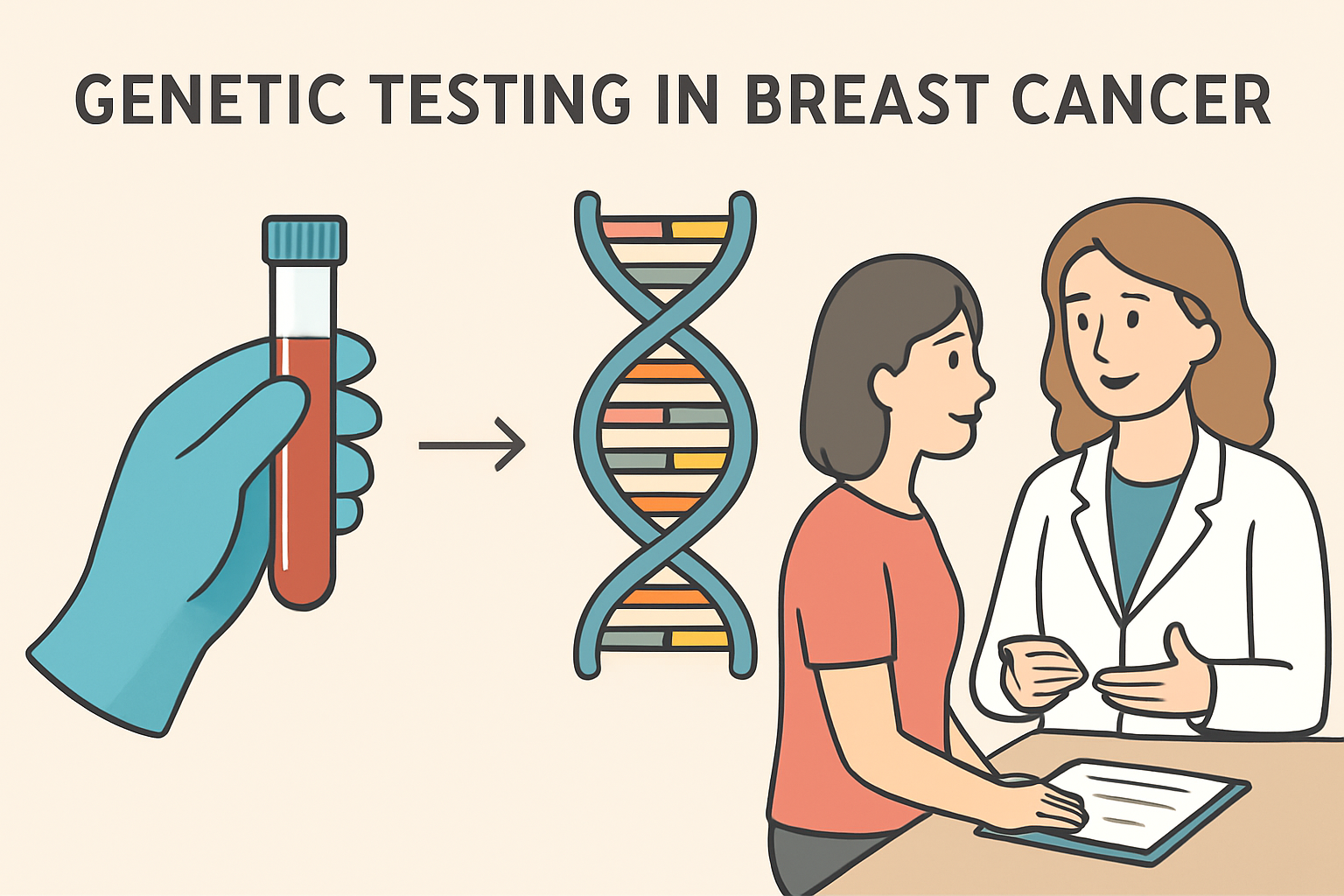
Genetic testing is an important part of the breast cancer journey for many patients and their loved ones. As our understanding of cancer grows, genetic testing has become a central tool—not just for diagnosing cancer, but also for identifying inherited risks and guiding treatment choices. However, the process, terminology, and meaning of results can be confusing. This guide aims to explain the basics of genetic testing in breast cancer with compassion and clarity, helping patients and families feel informed and empowered as they navigate care decisions.
Key Takeaway
Genetic testing for breast cancer helps patients and families understand their cancer risk, guide treatment decisions, and support proactive choices for the future.
What Is Genetic Testing in Breast Cancer?
Genetic testing in breast cancer refers to laboratory tests designed to look for specific inherited changes (mutations or variants) in a person’s genes that can increase the risk of developing breast cancer. Some genetic tests are performed on a blood sample, while others may use saliva or a tissue sample. While most breast cancer cases are not caused by inherited genetic mutations, approximately 5-10% are due to genetic factors that can be identified through testing.
The most well-known genes linked to breast cancer risk are BRCA1 and BRCA2. When there are harmful mutations in either of these genes, a person’s risk for breast cancer (as well as other cancers, such as ovarian or prostate) can be significantly higher than average. There are also other genes—like CHEK2, PALB2, ATM, and TP53—that may be included in testing panels to provide a more complete picture of hereditary cancer risk.
Key Concepts in Genetic Testing
- Inherited (germline) vs. acquired (somatic) mutations: Inherited mutations are passed down from parent to child and are present in nearly all cells of the body. Acquired mutations occur in the breast tissue and are not inherited. Genetic testing for cancer risk focuses on inherited mutations.
- Gene panels: Modern tests often check several genes at once (multi-gene panels) to evaluate risk for multiple cancer types.
- Variants of Uncertain Significance (VUS): Sometimes, tests identify gene changes whose impact is not yet known, called VUS. These results may need further study and do not automatically mean increased cancer risk is present.
Who Should Consider Genetic Testing?
Not everyone diagnosed with breast cancer needs genetic testing, but certain situations make it especially important. According to guidelines from leading organizations (such as the American Society of Clinical Oncology and the National Comprehensive Cancer Network), you may be offered or encouraged to pursue genetic testing if you:
- Are diagnosed with breast cancer at age 45 or younger
- Have triple-negative breast cancer diagnosed at age 60 or younger
- Have a personal or family history (on either side) of breast, ovarian, pancreatic, or prostate cancer
- Are a man diagnosed with breast cancer
- Have multiple relatives with breast or related cancers, especially at younger ages
- Have a known pathogenic mutation in your family (for example, a relative who carries a BRCA1 or BRCA2 mutation)
Other factors can also influence whether genetic testing is appropriate. Your doctor or a genetic counselor can help determine if you should be tested based on your personal and family history.
How Is Genetic Testing Done?
Genetic testing typically involves the following steps:
- Referral: Your oncologist or primary care doctor refers you for genetic counseling.
- Genetic counseling: This is a critical step where a specialized genetic counselor or genetics-trained healthcare provider explains:
- The reasons for testing
- What genes will be tested
- What the results might mean for you and your family
- Potential benefits, limitations, and privacy concerns
- Sample collection: A blood or saliva sample is taken for analysis.
- Laboratory analysis: The sample is analyzed for mutations in selected genes. Results can take days or weeks.
- Results and follow-up: Your genetic counselor or doctor will meet with you to discuss the results and what they may mean for your health, your treatment plan, and potentially your relatives.
Genetic counseling before and after testing is essential to help interpret results, avoid unnecessary worry, and support decision-making. In some healthcare systems, virtual or telehealth genetic counseling may be available.
Understanding Genetic Test Results
Genetic test results generally fall into the following categories:
- Positive: A known mutation linked to higher cancer risk was found. This information can affect care for both you and your family members.
- Negative: No disease-causing mutations were detected in the genes that were tested. This does not mean cancer risk is zero, but your risk may be similar to the general population unless other history suggests otherwise.
- Variants of Uncertain Significance (VUS): A gene change was found, but it is not currently known whether it increases cancer risk. Over time, more may be learned about these variants, sometimes requiring re-evaluation of earlier test results.
Genetic counselors will help you make sense of your results and what they mean for treatment, surveillance, and for the health of your family members. Sometimes, new discoveries in genetics may lead to recontacting patients if the meaning of previous results changes.
Implications for Family Members
If you test positive for an inherited mutation, your parents, siblings, and children may also carry the same mutation. Genetic counseling is recommended for at-risk family members so they can consider testing. This process is called “cascade testing” and can help empower your relatives to make informed decisions about their own health.
How Genetic Testing Can Affect Breast Cancer Treatment
Genetic findings can guide important aspects of breast cancer treatment and risk management, including:
- Surgical Planning: Those with high-risk mutations (like BRCA1/2) may consider preventive (prophylactic) mastectomy, oophorectomy (removal of the ovaries), or closer surveillance.
- Treatment Choice: Some targeted therapies (such as PARP inhibitors, e.g. olaparib) work especially well in patients with certain BRCA mutations. Clinical trials may be available for those with inherited mutations.
- Surveillance: People with inherited risk may benefit from earlier or more frequent screening (such as MRI in addition to mammography).
- Prevention: Understanding genetic risk can lead to preventive measures for unaffected family members, including medications or lifestyle changes.
Your oncology team will discuss these options with you as part of a personalized treatment plan if a mutation is found.
Common Questions and Concerns About Genetic Testing
- Will my insurance cover genetic testing? Coverage varies by country and insurance type. In many regions, testing is covered if you meet certain criteria. Your care team can help clarify costs and insurance details.
- How do I protect my genetic privacy? Genetic data is sensitive. Most regions have laws protecting your privacy, such as GINA (Genetic Information Nondiscrimination Act) in the United States or GDPR in Europe. Talk to your provider about local protections.
- Will a positive test affect my health insurance or employment? In many countries, laws prohibit health insurance or employment discrimination based on genetic information, but rules may vary by location. Review these issues with your care team or genetic counselor.
It is completely normal to feel anxious about genetic testing results and what they may mean for you and your family. Genetic counselors are trained to support you with both the practical and emotional aspects of the process.
What Patients Should Know
Ultimately, genetic testing is a personal choice. The decision to undergo testing should include discussion with a knowledgeable healthcare professional. Considerations include:
- How testing may or may not change your treatment plan
- How results could impact your loved ones
- Your comfort in handling uncertain or complex genetic information
- Availability of support and counseling before and after results
- Opportunities for research participation or support groups
It’s also important to be aware that as genetic science advances, new mutations and new implications may be discovered. Reaching out to reputable organizations and patient advocacy groups (such as Breastcancer.org, FORCE, and national cancer support resources) can provide ongoing support and education as your journey continues.
Sources
Key sources for this article include the National Comprehensive Cancer Network (NCCN) Guidelines, American Society of Clinical Oncology, BreastCancer.org, FORCE (Facing Our Risk of Cancer Empowered), and the National Cancer Institute.
Leave a Reply