In recent years, targeted therapy has become a key part of breast cancer treatment. As cancer medicine advances, doctors now recognize that not all breast cancers are the same. Each tumor may have unique features that can be targeted by modern drugs, going beyond traditional approaches like chemotherapy and hormone therapy. But what exactly is targeted therapy, how does it work, and what should patients know about this evolving treatment area?
Key Takeaway
Targeted therapies treat specific features of some breast cancers and may offer benefits over standard chemotherapy for selected patients. These therapies are not right for everyone, but understanding your tumor’s characteristics can help find the most effective treatment.
How Targeted Therapy Differs from Traditional Breast Cancer Treatments
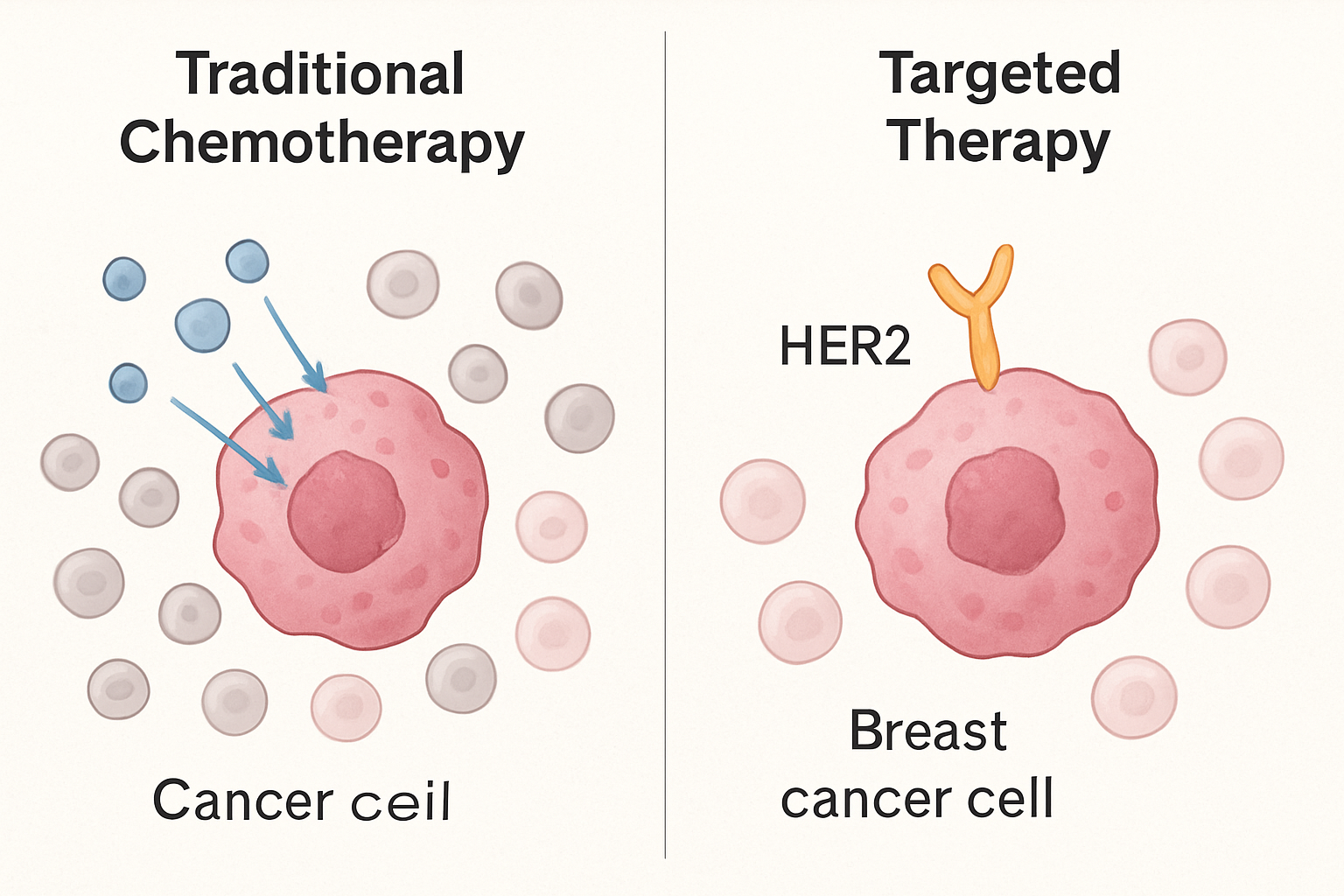
Traditional chemotherapy attacks fast-growing cells throughout the body, which includes both cancerous and healthy cells. This can result in side effects such as hair loss, nausea, fatigue, and a higher risk of infections. Hormone therapy, another mainstay in treating hormone receptor-positive breast cancer, blocks or reduces estrogen or progesterone to slow cancer growth.
Targeted therapy, in contrast, focuses on blocking specific molecules or signals crucial for cancer growth or survival. These might be found only or mostly on cancer cells, or be much more active in them. The aim is to kill or stop cancer cells while sparing more normal, healthy tissue. Because of this precision, some targeted therapies may cause fewer or different side effects than standard chemotherapy, though they can also cause new or unique reactions.
Types of Targeted Therapy Used in Breast Cancer
Many targeted therapies have been developed and approved for breast cancer, mostly for patients whose tumors have certain biological markers. Some common types include:
- HER2-targeted therapies: Cancers overexpressing the HER2 protein can be treated with drugs like trastuzumab (Herceptin), pertuzumab, ado-trastuzumab emtansine (Kadcyla), and others. These block HER2’s action or deliver toxic payloads directly to HER2-rich cancer cells.
- CDK4/6 inhibitors: These drugs (e.g., palbociclib, ribociclib, abemaciclib) block proteins needed for cell division and are often used in HR-positive, HER2-negative metastatic breast cancer, frequently combined with hormone therapy.
- PARP inhibitors: For patients with inherited BRCA1 or BRCA2 mutations, these therapies (like olaparib and talazoparib) make it harder for cancer cells to repair DNA damage, leading to cancer cell death.
- PI3K inhibitors: For some tumors with mutations in the PI3KCA gene, alpelisib may be an option—always in partnership with hormone therapy.
- Antibody-drug conjugates: These engineered drugs combine antibodies that target cancer cell markers with cytotoxic drugs, delivering chemotherapy directly to the cancer cell (e.g., trastuzumab deruxtecan for HER2-positive cancers).
Other targets are being explored in clinical trials and represent possible future therapies.
Who Benefits Most from Targeted Therapy?
Targeted therapies are generally prescribed based on the specific genetic, protein, or molecular traits of a breast tumor. Some patients are much more likely to benefit than others. For example:
- HER2-positive breast cancer: About 15-20% of breast cancers overexpress HER2. These tumors can be highly sensitive to anti-HER2 therapies, dramatically improving outcomes compared to chemotherapy alone.
- Hormone receptor-positive, HER2-negative metastatic breast cancer: Many women with this subtype now receive CDK4/6 inhibitors as a first-line option, often delaying or reducing chemotherapy need.
- BRCA-mutated cancers: Women with harmful BRCA1 or BRCA2 mutations (found by genetic testing) may benefit from PARP inhibitors after standard treatments.
- PATIENTS WITH SPECIFIC MUTATIONS: Genetic or molecular testing of the tumor is critical—only those whose cancers feature a “target” (like PIK3CA mutations) may qualify for certain drugs.
In summary, targeted therapies are not “one size fits all” drugs. Every patient should consult their oncology team about testing the tumor for relevant markers or mutations to determine if targeted therapy is an option.
The Science—How Targeted Therapy Works
Targeted therapies use a range of strategies to block cancer growth:
- Blocking growth signals: Many breast cancers rely on signals like HER2 or hormone receptors to keep growing. Drugs can interrupt these signaling pathways and slow or stop tumor growth.
- Triggering the immune system: Some targeted treatments (or related immunotherapies) help the immune system recognize and attack cancer cells, though this is less common in breast cancer than in some other cancer types.
- Interrupting blood supply: A few drugs target angiogenesis (new blood vessel growth), though this is less common in breast cancer compared to other cancers.
- Delivering cell-killing drugs precisely: Antibody-drug conjugates act as guided missiles, connecting a targeting antibody to toxic chemotherapy that is released only inside cancer cells.
The specific drug and the exact target depend on the patient’s tumor profile. Some therapies are given by vein (IV), others as pills or injections. They are often combined with other cancer treatments, such as chemotherapy or hormone therapy.
Risks and Side Effects of Targeted Therapy
Though targeted therapies are often better tolerated than chemotherapy, they are not free of side effects. Potential issues can include:
- Fatigue, sometimes severe
- Skin rashes or nail changes, especially with HER2 therapies
- Heart problems (rarely, with some HER2 drugs)
- Low blood counts or increased infection risk (with CDK4/6 inhibitors, for example)
- Diarrhea, nausea, or digestive problems
- Liver or kidney function changes (tracked by regular blood tests)
Healthcare teams carefully monitor patients for side effects. In many cases, side effects can be managed with dose changes, supportive therapy, or temporary treatment breaks. Some side effects, such as heart function changes, require special monitoring and can affect long-term health, so ongoing communication with your care team is crucial.
Current Limitations, Uncertainties, and the Future of Targeted Therapy
While targeted therapies have dramatically improved options for many patients, several challenges remain:
- Not all breast cancers express the target needed for a therapy to work.
- Cancers can mutate and become resistant, so treatment may stop working over time.
- Side effects can limit who can safely use certain drugs.
- Access and cost: Some therapies are expensive and may not be available everywhere.
- Ongoing research: New targets and combinations are being investigated, but not all prove effective in clinical trials.
Doctors may recommend clinical trial participation where appropriate, especially if standard treatments are no longer effective or if a patient’s tumor has uncommon features.
What Patients Should Know
The rise of targeted therapy reflects a new approach to breast cancer—one focused on the idea that not all cancers are the same and treatment should be tailored to the tumor’s biology. Here are key points for patients:
- Ask about testing: Molecular or genetic testing of your tumor can reveal if you are eligible for specific targeted therapies. This is often done automatically in new diagnoses, but confirm with your care team.
- Expect ongoing monitoring: Targeted therapies require regular check-ups and tests to make sure the drugs are working and to watch for side effects or resistance.
- Know the limits: Not everyone benefits. If you’re not eligible for targeted therapy now, new drugs may become available or a clinical trial could be right for you in the future.
- Report side effects early: Early management can help you stay on treatment and get the best results.
- Resources and support: Targeted therapy can be expensive and emotionally complex. Financial counseling and support groups are available at many cancer centers.
Ultimately, treatment choices are deeply personal and should be discussed in detail with your oncologist and care team, who can explain risks, benefits, and help navigate insurance or access issues as they arise.
Sources
American Cancer Society: “Targeted Therapy for Breast Cancer”; National Cancer Institute: “Types of Targeted Therapy” and “Drugs Approved for Breast Cancer”; Breastcancer.org: “Targeted Therapy for Breast Cancer”; Key recent reviews in New England Journal of Medicine and Journal of Clinical Oncology.
Leave a Reply