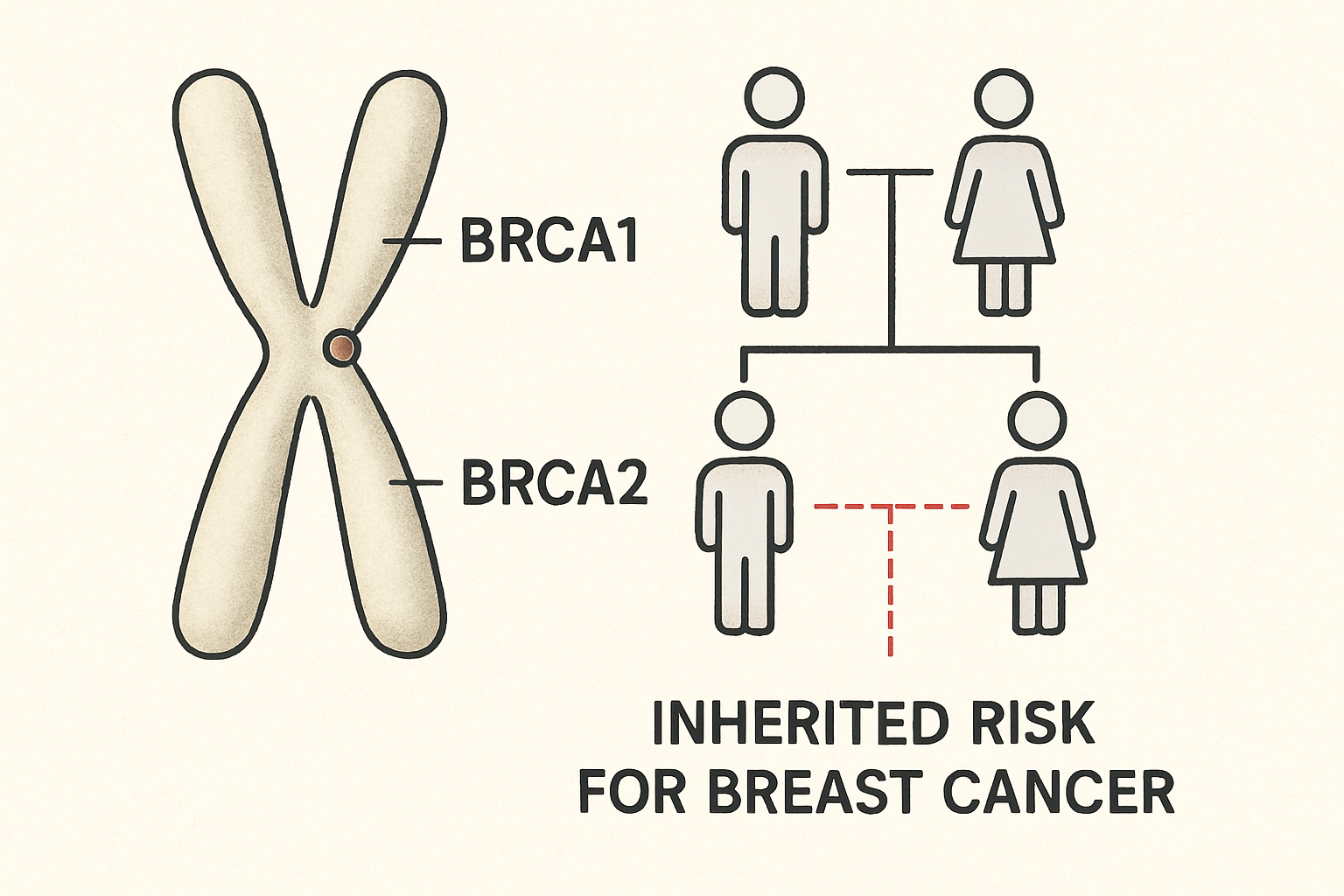
For many people diagnosed with breast cancer, genetics play an important role in risk and treatment planning. Among the most well-known genetic factors are mutations in the BRCA1 and BRCA2 genes. Understanding what these mutations are, how they are inherited, and what they mean for patients and families can help guide important decisions about screening, prevention, and care.
Key Takeaway
BRCA mutations significantly increase breast cancer risk and have implications for family members. Testing and counseling can guide treatment and prevention strategies for those affected.
What Are BRCA1 and BRCA2 Mutations?
BRCA1 and BRCA2 (Breast Cancer gene 1 and 2) are genes that help repair DNA damage in cells. When working normally, they protect against the uncontrolled cell growth that causes cancer. However, mutations—changes in the gene’s DNA sequence—can disrupt this function, allowing cancer to develop more easily. These are often called “hereditary” or “inherited” mutations, meaning they can be passed from parent to child. While everyone has BRCA1 and BRCA2 genes, inherited mutations are relatively rare in the general population—which is why only about 5-10% of breast cancers in women are linked to these inherited gene changes.
How BRCA Mutations Affect Breast Cancer Risk
Individuals who inherit a harmful mutation in BRCA1 or BRCA2 face a much higher lifetime risk of breast cancer compared to those without these mutations. According to large studies, women with a BRCA1 mutation have a 55-72% risk of developing breast cancer by age 70, and those with a BRCA2 mutation have a 45-69% risk. This is considerably higher than the average woman’s risk of about 13%. Men with these mutations also have an increased—though much lower—risk, and both BRCA1 and BRCA2 are linked to other cancer types as well (e.g., ovarian, prostate, pancreatic).
How Are BRCA Mutations Inherited?
BRCA mutations are passed down through families in what geneticists call an “autosomal dominant” pattern. This means a child has a 50% chance of inheriting the mutation if one parent carries the gene change. Both men and women can pass on BRCA mutations, and it is possible for a family to carry a mutation for generations without everyone developing cancer. Inherited BRCA mutations can affect anyone, but they are more common in certain populations (such as people of Ashkenazi Jewish descent).
Genetic Testing for BRCA Mutations
Genetic testing can identify BRCA mutations through a blood or saliva sample. It’s usually recommended if you have:
- A personal or family history of breast cancer diagnosed at a young age (before 50)
- Multiple family members with breast, ovarian, pancreatic, or prostate cancers
- Male breast cancer in the family
- A known BRCA mutation in a close relative
- Heritage with higher prevalence, such as Ashkenazi Jewish ancestry
Testing is typically offered alongside genetic counseling to help you understand the process, benefits, risks, and possible results. Results may be “positive” (mutation found), “negative” (no mutation), or “variant of uncertain significance” (change found, but unclear what it means). The meaning of the result may have different implications for cancer risk and management.
What Happens If You Have a BRCA Mutation?
A positive BRCA test result does not mean you will definitely get cancer, but it does mean you have a much higher risk. There are several next steps that you and your healthcare team may discuss, depending on your situation:
- Increased Screening: More frequent breast imaging (MRI, ultrasound, mammography) to detect cancer early
- Risk-Reducing Surgery: Some may choose preventive (prophylactic) mastectomy, removal of the ovaries and fallopian tubes, or both
- Medications: Drugs like tamoxifen or aromatase inhibitors can help lower risk in some women
- Family Involvement: Informing relatives, since they may also carry the mutation, and inviting them to consider testing
Treatment choices for people who already have breast cancer may also be guided by BRCA status. For example, certain targeted drugs called PARP inhibitors are approved for advanced cases in people with BRCA mutations.
What Does BRCA Status Mean for Family Members?
A diagnosis of a BRCA mutation can have implications for close relatives. Because the mutation can be inherited by children, siblings, and other blood relatives, genetic counseling is often recommended for at-risk family members. Early knowledge can lead to informed choices for screening or preventive actions. Family communication about these risks can sometimes be emotionally challenging, and support from counselors or support groups may help.
Common Questions and Misunderstandings About BRCA Mutations
- “Can only women be tested?” – No, men can also carry and pass on BRCA mutations, and are at increased risk for several cancers.
- “Does a negative test mean zero cancer risk?” – No, other non-BRCA factors still contribute to cancer risk, and regular screening is important for everyone.
- “Are all breast cancers caused by BRCA mutations?” – No, inherited BRCA mutations cause only a small fraction of all cases (about 5-10%). Most are due to other causes.
- “Should all breast cancer patients get BRCA testing?” – Not necessarily. Guidelines recommend testing for those with certain risk factors; speak to your doctor or a genetic counselor for personalized guidance.
What Patients Should Know
If you or a loved one are diagnosed with breast cancer or have a strong family history, understanding BRCA mutations is important for your future health planning. Discuss with your oncology team or a genetic counselor whether genetic testing is appropriate. If a BRCA mutation is found, know that you are not alone: many options exist for prevention, early detection, and treatment. Family members can also benefit from learning their risk, and support is available throughout this process. Awareness is the first step in making informed, confident decisions for yourself and your family.
Sources
Information in this guide is drawn from the American Cancer Society, National Cancer Institute, Breastcancer.org, and peer-reviewed medical literature as of 2024.
Leave a Reply